Posts in Capacity Building
Why Your Annual Report Matters More Than You Think: The Strategic Value of Documentation

Most organizations treat annual reports as compliance obligations. The best organizations use them as strategic learning tools that drive continuous improvement.

Across the Caribbean, development organizations, nonprofits, and government agencies rush to complete annual reports in the final weeks of December. Teams scramble to reconstruct achievements, dig through email threads for data, and piece together narratives from fragmented memories. By the time these reports reach stakeholders, they represent months of avoidable stress and often fail to capture the full picture of what actually happened.

This is not how annual reporting should work.

Annual reports serve a far more strategic purpose than satisfying donor requirements or regulatory compliance. When approached systematically, they become organizational memory systems that preserve knowledge, guide decision-making, and accelerate learning. Research demonstrates that organizations with robust documentation practices show improved decision-making capabilities and reduced knowledge loss when staff transitions occur (Levy, 2011). Yet nearly 60 percent of nonprofit leaders report they do not track metrics for learning at the organization level (Stanford Social Innovation Review).

The question is not whether to complete annual reports. The question is how to make documentation work for your organization rather than against it.

The Hidden Costs of Poor Documentation

When organizations fail to document their work systematically throughout the year, they pay three distinct costs:

Knowledge Loss

Staff turnover, role changes, and organizational restructuring create vulnerability. Without documented processes and outcomes, organizations lose critical knowledge about what worked, what failed, and why. This knowledge attrition forces teams to recreate solutions to problems they have already solved. Research on organizational memory demonstrates that knowledge loss occurs both when organizations fail to capture knowledge initially and when stored knowledge deteriorates over time without maintenance (De Long, 2004).

Repeated Mistakes

Organizations without documentation systems repeat the same implementation errors across projects. A program that struggled with community engagement in one region faces identical challenges in another region because lessons were never formally captured. Teams waste resources solving problems that colleagues addressed months earlier but never recorded.

Missed Opportunities

Undocumented successes cannot be replicated systematically. When a team achieves exceptional results through innovative approaches, those insights remain trapped in individual memory unless captured and shared. The organization cannot scale what it cannot describe.

What Research Reveals About Documentation Benefits

Multiple studies across organizational development, knowledge management, and implementation science demonstrate consistent benefits when organizations prioritize systematic documentation:

Enhanced Accountability and Transparency

Organizations that maintain clear documentation build stronger trust relationships with stakeholders. Research on nonprofit transparency shows that annual reporting provides opportunities to showcase successes while demonstrating how donor support creates tangible community impact (Anedot, 2024). When funders, board members, and community partners can see documented progress toward stated goals, accountability becomes embedded in organizational culture rather than treated as external compliance.

Improved Decision-Making

Access to documented past experiences allows organizations to make more informed strategic choices. Organizations with robust organizational memory systems reduce decision-making time by 30 to 40 percent because leaders can quickly review what similar initiatives achieved previously (Walsh & Ungson, 1991). Documentation creates institutional knowledge that outlasts individual staff members.

Stronger Organizational Learning

Organizations that track their work systematically develop clearer learning goals and create better conditions for knowledge sharing. Research on organizational learning demonstrates that more than 90 percent of nonprofit leaders care deeply about learning, yet lack defined goals and tracking systems (Stanford Social Innovation Review). Documentation transforms vague commitments to learning into measurable progress.

Risk Management and Crisis Preparedness

Documented experiences provide repositories of lessons learned that organizations can apply when navigating challenges. Organizations with strong documentation practices recover more quickly from crises because they can access established protocols, previous response strategies, and validated solutions (QuestionPro, 2024).

The Strategic Case for Year-Round Documentation

The conventional approach treats annual reporting as a December task. The strategic approach recognizes documentation as continuous organizational practice that happens throughout the year.

Organizational Memory as Competitive Advantage

Preservation of organizational memory becomes increasingly important as experiential knowledge drives organizational effectiveness (Stein & Zwass, 1995). Organizations that document their work create searchable knowledge bases that new staff can access during onboarding, reducing time-to-productivity. When teams face similar challenges, they can review documented approaches rather than starting from scratch.

Caribbean organizations face particular pressures related to staff mobility, limited resources, and complex implementation environments. Systematic documentation protects against knowledge loss when experienced staff members pursue opportunities elsewhere or when organizational restructuring disrupts established workflows.

Creating Shared Accountability

When documentation happens continuously rather than annually, accountability shifts from compliance to culture. Teams that document weekly or monthly progress develop clearer awareness of what they are achieving and where they struggle. This regular reflection creates opportunities for mid-course corrections rather than year-end surprises.

Organizations practicing continuous documentation report higher staff engagement because team members see their contributions recorded and valued (Learning Policy Institute, 2025). Documentation validates the work happening across an organization.

Building Evidence for Advocacy

Documented achievements provide concrete evidence when organizations advocate for policy changes, increased funding, or expanded mandates. Leaders can point to specific data demonstrating program impact rather than relying on anecdotal success stories. This evidence-based approach strengthens relationships with funders and partners who require demonstrated results.

Simple Systems for Sustainable Documentation

The challenge many organizations face involves creating documentation systems that teams will actually use. Complex platforms fail when staff lack time or technical capacity to engage with them. Effective systems balance comprehensiveness with simplicity.

Quarterly Review Sessions

Implement standing quarterly review meetings where teams collectively document:

  • Key achievements this quarter

  • Challenges encountered and how they were addressed

  • Lessons learned that should inform future work

  • Data points required for annual reporting (participant numbers, resources deployed, outcomes achieved)

These sessions should take 60 to 90 minutes and follow a standard template that makes participation straightforward. The outputs become building blocks for year-end reports.

Centralized Digital Repositories

Simple, accessible platforms work better than sophisticated systems that require training. Options include:

For Small Organizations (0-20 staff):

  • Google Workspace (Drive, Sheets, Docs) with organized folder structures

  • Microsoft Teams with SharePoint integration for document management

  • Notion or similar collaborative platforms with free tiers

For Medium Organizations (20-100 staff):

  • Cloud-based project management tools (Asana, Monday.com, Smartsheet)

  • Simple CRM systems with customizable reporting (NeonCRM, Bloomerang)

  • Shared databases (Airtable) that team members can update regularly

The key criterion is accessibility. If staff cannot easily add information or retrieve documents, the system fails regardless of its technical capabilities.

Monthly Data Capture Templates

Provide teams with simple templates for monthly data collection aligned with annual reporting requirements. Templates should request:

  • Programmatic data (participants served, activities completed, resources deployed)

  • Qualitative observations (what worked well, what challenged us, unexpected outcomes)

  • Financial tracking (expenses against budget, procurement milestones)

  • Partnership developments (new collaborations, strengthened relationships, coordination challenges)

When teams complete these templates monthly, annual reports become compilation exercises rather than reconstruction projects.

Designated Documentation Responsibilities

Assign clear accountability for documentation rather than assuming everyone will contribute voluntarily. Options include:

  • Rotating monthly "documentation leads" within teams

  • Including documentation deliverables in individual performance objectives

  • Allocating 5 to 10 percent of staff time specifically for documentation activities

  • Creating internal recognition for teams that maintain excellent documentation

Ensuring You Have the Data When You Need It

Many organizations will get to December 2026 only to discover they lack the data required for comprehensive annual reporting. Preventing this requires intentional planning now.

Establish Your Data Requirements Early

Review your annual report template for 2025 to identify what information you will need for 2026. Common categories include:

  • Financial data (revenue by source, expenditures by category, budget variance)

  • Programmatic metrics (beneficiaries served, services delivered, geographic coverage)

  • Human resources (staff composition, turnover rates, training hours)

  • Outcomes and impact (results achieved against stated objectives)

  • Challenges and lessons learned (what worked, what did not, why)

Once you have identified requirements, create tracking mechanisms for each category.

Create Automated Data Pipelines Where Possible

Leverage technology to reduce manual data collection burden:

  • Connect accounting software directly to reporting dashboards

  • Use form builders (Google Forms, Typeform) to collect structured data from field teams

  • Implement automated monthly expense reports that feed into annual summaries

  • Set up calendar reminders for quarterly data reviews

Automation reduces the risk that busy teams will delay documentation until memory fades.

Build Mid-Year Check-Points

Schedule formal reviews in June 2025 and December 2025 to assess:

  • Are we capturing all required data elements?

  • Are our templates working effectively?

  • What adjustments do we need to make before year-end?

These check-points create opportunities to correct course when problems are manageable rather than discovering gaps too late to address them.

Document Your Challenges Honestly

Organizations often sanitize annual reports to present only successes. This approach wastes the learning opportunity that documentation provides. Research on organizational learning demonstrates that organizations grow more rapidly when they capture and analyze failures alongside successes.

Create protected spaces where teams can document implementation challenges, partnership difficulties, and strategic miscalculations. These honest assessments become your organization's most valuable learning resources.

Making Documentation Work in Caribbean Contexts

Caribbean organizations face specific challenges that demand culturally appropriate documentation approaches:

Resource Constraints

Limited budgets require documentation systems that maximize free or low-cost tools. The platforms mentioned earlier (Google Workspace, basic CRMs, shared spreadsheets) serve most organizational needs without enterprise software costs.

Small Team Capacity

In organizations where each person wears multiple hats, documentation systems must be intuitive and quick. Quarterly 90-minute sessions create manageable commitments that do not overwhelm already stretched teams.

Oral Communication Preferences

Caribbean professional culture often emphasizes verbal communication over written documentation. Bridge this gap by:

  • Recording verbal debriefs and having someone transcribe key points

  • Using voice-to-text features on mobile devices for field documentation

  • Conducting brief video debriefs that capture team reflections

The format matters less than ensuring critical knowledge gets preserved.

Cross-National Collaboration

Regional organizations operating across multiple Caribbean territories need documentation systems that teams in different countries can access reliably. Cloud-based platforms solve this challenge more effectively than systems requiring physical presence or local server access.

From Compliance to Competitive Advantage

The organizations that thrive in the Caribbean development landscape over the next decade will be those that treat documentation as strategic infrastructure rather than administrative burden.

When you document systematically, you create organizational memory that protects against knowledge loss. When you capture both successes and failures honestly, you accelerate learning. When you make data accessible to the teams who need it, you improve decision-making speed and quality.

Your 2026 annual report should not be a December scramble. It should be a straightforward compilation of knowledge you have been systematically capturing all year. The time to build that system is now.

Start now by taking three actions:

  1. Schedule your first quarterly documentation session for April 2025

  2. Create a simple shared folder structure for monthly data collection

  3. Assign someone responsibility for ensuring documentation actually happens

These small steps transform annual reporting from compliance burden into learning advantage.

References

De Long, D. W. (2004). Lost Knowledge: Confronting the Threat of an Aging Workforce. Oxford University Press.

Levy, M. (2011). Knowledge retention: Minimizing organizational business loss. Journal of Knowledge Management, 15(4), 582-600.

Stanford Social Innovation Review. The Challenge of Organizational Learning. https://ssir.org/articles/entry/the_challenge_of_organizational_learning

Learning Policy Institute (2025). 2023-2024 Annual Report: Building Equitable and Empowering Education Systems. https://learningpolicyinstitute.org/product/2023-2024-annual-report

Stein, E. W., & Zwass, V. (1995). Actualizing organizational memory with information systems. Information Systems Research, 6(2), 85-117.

Walsh, J. P., & Ungson, G. R. (1991). Organizational memory. Academy of Management Review, 16(1), 57-91.

Anedot (2024). Organizational Transparency: 6 Steps to Improve Nonprofit Transparency. https://www.anedot.com/blog/organizational-transparency

QuestionPro (2024). Organizational Memory: Strategies for Success and Continuity. https://www.questionpro.com/blog/organizational-memory/

When Digital Government Becomes Digital Exclusion: The Caribbean's Growing Access Crisis

Across the Caribbean, government services are rapidly moving online. Benefits applications, healthcare appointments, court filings, and payment systems now demand digital access as the default entry point. Ministries frame these changes as efficiency gains, but beneath the shiny platforms and streamlined interfaces, a quiet challenge unfolds: thousands of Caribbean citizens are being systematically locked out of essential public services because they cannot navigate the digital systems designed to serve them.

This is not a technology problem. It is an implementation problem. When governments digitise services without building the infrastructure, skills, and support systems that enable universal participation, they replace one form of exclusion with another.

Who Gets Left Behind?

The digital divide in the Caribbean cuts along predictable lines of vulnerability. Research from the Economic Commission for Latin America and the Caribbean shows that in Latin America and the Caribbean region, only 46.4% of low-income households have fixed internet connections compared to 84.6% of wealthier households. The urban-rural divide compounds this disparity further.

Trinidad and Tobago's National Digital Inclusion Survey 2021 confirms what frontline workers already know: digital development varies dramatically across geographic areas and demographic groups. The country's own digital transformation project acknowledges that "providing internet and mobile connections for vulnerable and underserved populations (i.e., rural, physically challenged, youth, and elderly) remains difficult."

Older adults face compounded barriers. They report low confidence using devices, require assistance setting up technology, and struggle with interfaces designed for digital natives. When health services moved online during COVID-19, older adults from minoritised ethnic backgrounds faced particular challenges navigating remote appointments, understanding digital platforms, and explaining symptoms without in-person interaction.

People with disabilities encounter accessibility barriers that designers often fail to anticipate. Screen readers break on poorly coded forms. Visual or motor impairments make complex navigation impossible. Cognitive differences clash with rigid, unforgiving interfaces.

Rural communities face infrastructure gaps that no amount of digital literacy training can overcome. Unreliable connectivity, expensive data packages, and limited device access create fundamental barriers before questions of skill even arise.

Migrants navigating government systems in their non-native language find digital platforms particularly unforgiving. Unlike human counter staff who can clarify misunderstandings, automated systems offer no flexibility for language barriers or cultural confusion about administrative processes.

The Hidden Costs of Online-Only Systems

When governments shift services online without maintaining alternative access points, the consequences extend far beyond inconvenience.

Benefits go unclaimed. When applying for social assistance requires online submission, those without reliable access or digital skills simply cannot apply. They miss deadlines, fail to navigate multi-step verification processes, or abandon applications when error messages provide no clear path forward. The system counts these failures as reduced demand rather than systemic exclusion.

Healthcare delays become dangerous. Online appointment booking seems efficient until you consider the person who cannot secure a slot because they lack internet access, the elderly patient who misses follow-up care because email notifications disappeared into spam folders, or the diabetic who cannot refill prescriptions through the new portal.

Informal fixers emerge. A shadow economy develops around digital access. People pay neighbours or relatives to complete online forms, creating dependencies that compromise privacy and agency. Some turn to storefront businesses charging fees to navigate government websites, introducing costs that defeat the purpose of free public services.

Dignity erodes. Being unable to independently access services your taxes support diminishes citizenship. The message received is clear: you do not count in this modernised system unless you can keep up.

The False Assumption: Phone Ownership Equals Digital Access

Policy makers often confuse device ownership with digital capability. Yes, high mobile phone penetration exists across Trinidad and Tobago, exceeding Latin American and Caribbean averages. But owning a smartphone and successfully navigating complex government portals are entirely different capabilities.

Digital literacy research consistently demonstrates that merely having access to devices does not translate to effective use. People need information navigation literacy to access the internet safely. They require culturally appropriate content in plain language. They need confidence overcoming fear of making mistakes. Research shows that digital skills shape people's digital experience, helping them overcome fear of using electronic devices and navigate digital spaces effectively.

When governments assume "everyone has a phone now" and design accordingly, they systematically exclude those whose phone skills extend to calls and WhatsApp but not to multi-factor authentication, PDF uploads, or government portal navigation.

What Inclusive Digital Government Actually Requires

Moving services online can genuinely improve access and efficiency, but only when implementation considers how citizens will actually use these systems. Caribbean governments pursuing digital transformation can learn from both successes and failures across the region and globally.

Maintain assisted digital channels. Not everyone will successfully use digital services independently. Trinidad and Tobago's digital transformation project explicitly aims to "improve efficiency and reduce transaction costs to government and citizens, while expanding the inclusiveness of the provision of such services to the elderly, the poor, persons with disabilities, women and girls and residents of rural communities." This requires trained staff who can guide users through digital processes, help desks in community locations, and phone support that does not simply redirect to websites.

Design for offline alternatives. Essential services should never exist only online. Paper forms, in-person appointments, and telephone submission options must remain available, particularly for services affecting basic rights and entitlements. Research on European digital public services shows that barriers such as limited digital skills, access to technology, and inadequate service design disproportionately affect vulnerable groups including the elderly and low-income populations.

Build digital skills as social protection. Digital literacy cannot be treated as a personal responsibility separate from service delivery. When governments require digital access for benefits, healthcare, or civic participation, they must provide structured pathways to acquiring necessary skills. Community-engaged learning approaches that bring trained facilitators into communities show promise for reducing digital divides experienced by underserved populations.

Test with actual users before launch. Caribbean governments pursuing digital transformation initiatives can incorporate user testing with vulnerable populations before rolling out new systems. What works for a ministry official with reliable internet and university education may fail completely for a rural resident with intermittent connectivity and primary school completion. Implementation science frameworks like the Consolidated Framework for Implementation Research (CFIR) emphasise assessing characteristics of individuals including their knowledge, beliefs, and self-efficacy before expecting adoption.

Create feedback mechanisms that capture exclusion. When people cannot access services, they often disappear from official view. Systems should track abandonment rates, failed attempts, and requests for assistance as signals of exclusion rather than simply measuring successful completions. This data should drive iterative improvement rather than being dismissed as user error.

The Urgency of Now

Governments are moving quickly. The UN E-Government Survey shows Latin American and Caribbean countries are highly committed to pursuing digital government strategies. Multiple regional initiatives from UN DESA, ECLAC, the World Bank, and the IDB are actively supporting Caribbean digital transformation.

But speed without inclusion creates harm. Every month that services exist only online is a month that vulnerable citizens cannot access what they need. Every poorly designed portal is another barrier to healthcare, income support, or civic participation.

Progress should be measured not by platforms launched or services digitised, but by whether all citizens can actually access what they need. When a rural grandmother can apply for her pension, when a migrant can renew their work permit, when a person with disabilities can complete a form independently, when anyone needing government services can do so with dignity, then we will have achieved digital transformation worth celebrating.

Until then, what governments are building is not modernisation. It is another way to leave people behind.

Need support implementing inclusive digital government services? Uwàmìto Consulting works with Caribbean governments and development organisations to design and implement digital transformation initiatives that genuinely serve all citizens. Our implementation science expertise helps you navigate the complex human factors that determine whether technological investments create value or create new barriers. Get in touch to discuss how we can support your inclusive digital transformation journey.

Planning for the impending recession.

It's a tough time to be a business owner but taking some action to prepare for the next recession could help you stay afloat. Here are several steps you can take today to be ready for tomorrow.

Have a financial plan.

A financial plan is a detailed document that outlines your goals, how much you have to invest, and what steps you need to take to accomplish those goals. According to Dina Kaplan and Scott Mecum, authors of The Financial Plan Handbook: A Step-By-Step Guide To Writing Your Own Personal Budget, there are three key elements of creating a financial plan:

  1. Setting realistic goals based on your values and priorities

  2. Understanding the importance of saving regularly and sticking with it

  3. Developing an investment strategy that matches your risk tolerance

Have a budget and track your spending.

Once you have identified your goals, it’s time to make a budget. You can use an online calculator or spreadsheet to do this, or just figure out how much money you have coming in each month and subtract that from the total amount of money needed to pay all your bills. The difference will be how much is left over for paying off debt, investing for retirement and other financial goals.

Keep track of what you spend every month on things like food and gas so that when times get tough, there won't be any surprises about how much more might need to go toward necessities such as groceries or transportation costs. In addition to keeping track of these expenses in a paper notebook or digital app like Mint (which allows users access through their computer browser), many people find it helpful to write down their budget numbers directly on their bank account statements so they can see exactly where their hard-earned cash goes each month—and often times where it doesn't go!

Build your emergency fund.

Building an emergency fund can be a daunting task if you're just starting out. The idea of building up to six months' worth of expenses is downright scary, especially if you've never had savings before. But it's important to start somewhere, so here's some advice for how to get started on building your emergency fund:

Start small and work up from there. You don't need to save all $6,000 or whatever in one go—just use the money from each paycheck until you have enough saved up for an emergency (or at least for most emergencies). If this means saving $5 per paycheck, then do it! It'll add up over time and help ensure that when something bad happens—say your car breaks down or there's a big medical bill—you won't have to resort immediately back into debt because there aren't any other options available besides borrowing money at high rates (and potentially losing credit).

Consider putting part of your savings into a high-yield online bank account like Ally Bank or Capital One 360 so that interest will build faster than what you'd get with most traditional financial institutions; remember though that these types of accounts generally charge higher fees than traditional banks so keep this in mind when making decisions about where best

Don’t try to time the market.

A recession is a time of uncertainty, and it's natural to think about what might happen. But the truth is that no one knows exactly how bad a recession will be or when it will start. Trying to time the market can be an expensive and stressful experience, so don't do it. Instead, focus on your long-term goals and stick with them through good times and bad.

Reduce or eliminate discretionary spending.

To reduce or eliminate discretionary spending, it's important to know exactly what you're saving for. The best way to do this is by setting a budget and sticking with it. If you don't already have a budget, start with one of the dozens of free online tools available that can help you create one.

If your income is adequate, try not to change anything about your lifestyle — just cut back on frivolous things that aren't necessities like eating out often or buying new clothes. You should also be sure not to spend money on things that aren't necessities: if something breaks in your house while you're using it as part of an experiment (such as breaking through ice), fix it instead of replacing it with something new.

Conclusion

Now that we’ve covered all the basics of preparing for a recession, we hope you feel a bit more confident in your ability to make smart financial decisions during these uncertain times. Sure, it can be scary to think about losing your job or having trouble paying the bills, but with some careful planning and preparation, you can minimize that fear and even come out on top when the recession is over. Remember: nothing will protect you 100% against everything that could happen. But when you take an active role in planning ahead like this, you can reduce your worry and be better prepared in case something does go wrong.

Simple Ways to Stay Effective and Prevent Overload........

So, over the years we have tried all types of tools to help with work organisation to ensure deadlines are met within time and budget, additionally, ensuring protocols and policies are observed while working within the frame of an organisation. It can be plenty!
..
Some of the tools are among:
1. Good stationery – great writing pens, highlighters, post its, writing paper – first and foremost.

2. Evernote – for taking notes at meetings and writing minutes and follow-up items quickly.

3. Trello and Asana – for task-oriented projects and overall one-on-one client management.

4. Visio – Process maps are friendly – you can map an entire process which can help to create standard operating procedures quickly.

5.Toolkits/ Manuals/ Books/ Frameworks – for training and completing important deliverables that are specific in a content type.

6. Microsoft Suite – all of it.

7. MUSIC and it is in caps for a reason.

8.Vision book/ board - keeping ideals visible so at any time there is a reminder of what the why.

9. The mobile phone – appointments, calendars, grocery lists, voice notes.

10. BOOKS another caps.
...
While tools are great, having an approach to work helps. Doing the recurring stuff every single day (call, add your entries on the finance spreadsheet, put in your deliverables, update, check dashboard). Soon you will have a system with a logical flow, triggered by one action to the next.

Having a process and a system has helped to free up time for creativity and brainstorming and it is easy to delegate eventually. When things don’t go as planned, having a system and process helps so tweaking is easy to suit the situation.
...
At Uwàmìto Consulting we solve issues. Contact us for support on all social media platforms, our website link www.uwamito.com.
WhatsApp/Call - 1.868.728.9024
..
#asana #trello #programming #webdevelopment #instagram #machinelearning #bhfyp #webdesign #development #artificialintelligence #management #project #smallbusiness #businessowner #entrepreneurlife #daily #routine #habits #instagood #training #professional #life #happy #business #inspiration #instadaily #entrepreneur #selfemployment #staff #manager

The cost of Transition.

How has the current pandemic affected you as a business owner?

You changed your previous business approach?

You started a business based on an idea you always had? or,

You birthed a new business based on an opportunity that presented itself?

.

.

Like the lyrics of this song by 'Patrice Roberts' many of us, yes us did not remain the same. We changed because it was necessary.

.

We have been engaging with some 'stars' or business owners and leaders who have no shortage of resilience, they showed up for themselves during the pandemic and created some beautiful, solid frameworks that have started to work really well. This process has not been without challenges and more often the challenges that are most daunting are the internal ones. We know them all too well...

.

.

The truth of the matter is, what Uwamito Consulting provide is special guidance, we agree on strategies and create tools and systems specific to the needs of those we support.

.

.

Each person or business is different but our services can include - social media profile management (content created, posting schedule), leadership assessment (strengths and gaps), suggestion for capacity improvement based on blocks i.e. books to read or referral for counselling or public speaking it can vary, tools for personal and business management, weekly check-ins and 24/7 emergency strategy support.

.

.

At all times you are in control. Our services are provided with the highest levels of confidentiality and where necessary we sign non-disclosure agreements. There is a science to becoming resilient and we make it fun and very easy for you to meet and exceed your goals. Our packages are affordable.

.

.

Engaging us easy.

Send an email to: uwamito.consultancy@gmail.com.

Call or WhatsApp: +1.868.728.9024

Visit our Website: https://www.uwamito.com

DM us on any or all social media platforms.

.

.

#leader #manager #business #success #entrepreneur #mindset #entrepreneurship #instadaily #entrepreneurlife #smallbusiness #successmindset #wealth #growth #spirituality #marketing #mindsetcoach #leadership #keytosuccess #music #patriceroberts #soca #resilience #goals #win #doit

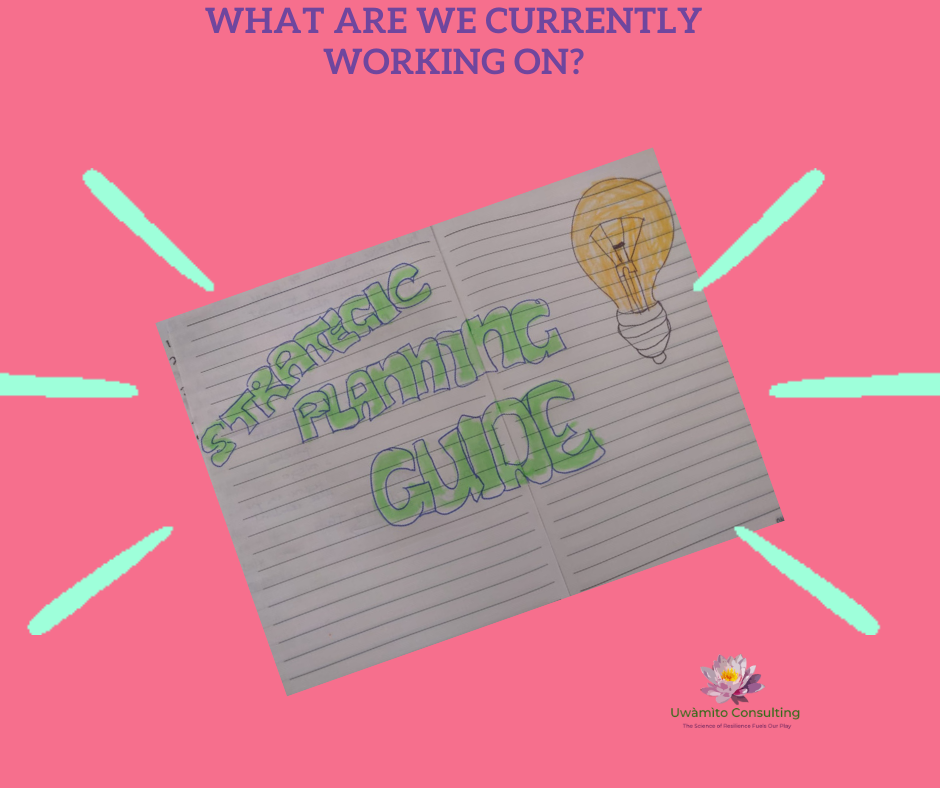
Strategic Planning Guide - An upcoming resource

During the two decades of doing development work, we have worked with organisations driving profound impact normally supporting and improving resilience among people. A key observation is that more than 95% of these organisations had no strategic plans, and for the few who had strategic plans, those plans were either very close to expiring or outdated. Those organisations often had great credibility and were managing large and vital projects. These organisations found themselves in a bind whenever a project ended. Having a strategic plan that is respected and owned by internal personnel and stakeholders is an important ingredient towards ensuring sustainability.

Strategic plans map your approach to defining your future for the next 3-5years. You examine your current status in relation to your environment and chart your future based on trends and of course your mission. But, there is an inherent challenge, what if your environment changes or what if you are unable to be agile enough to capitalise on an opportunity or an option which presents itself while you are implementing your plan? So whilst plans are important the interplay between leadership, being alert and your organisational culture may impact your level of eventual success.

Despite unplanned variables, strategic plans once completed and committed to will onset a most positive trajectory.

Are you seeking a solution or guide to develop your strategic plan? Do you want to learn how to facilitate the process, how to customise and adapt to reality?

Sign up and be notified when we are through. We are consolidating our years of experience in developing this resource: www.uwamito.com/contact - you can also get a freebie in the process.